Before you close the doors, find out who would buy it
Gene planned to lock up his repair shop on New Year's Eve and sell the vans. His daughter asked one question first: did you ask anyone if they would buy it?
By The YourBizWorth team · 7 min read
Gene Halvorsen is 67. He has run Halvorsen Appliance Repair in Alder Falls for thirty-one years. Two vans, one technician named Luis, Bev in the office three days a week, and a phone that rings all morning.
In September he made a plan. Work through December, lock the door on New Year's Eve, sell the vans and the parts, and give his customers the number of a shop in the next town.
His daughter heard the plan at dinner and asked one question. Did you ask anyone if they would buy it? He had not. Gene, his shop, his staff and Alder Falls are made up. The question is real.
Chapter 1
What closing leaves on the table
Example only, with made-up numbers. Gene's tax returns show the shop earns him about $70,000 a year, once his own pay and a few personal costs are added back. Accountants call that seller's discretionary earnings, or SDE.
If he closes, the vans, the tools and the parts shelves sell for used prices. Gene guesses $22,000. The customers, the phone number and thirty-one years of good name sell for nothing, because there is nothing left to sell them with.
2.0xthe median multiple of owner earnings (SDE) that brokers reported for sales under $500,000 (IBBA and M&A Source, Q4 2025)
At that median, a shop earning $70,000 a year would price around $140,000. A median is the middle, not a promise. Real sales land above and below it, depending on the books, the lease and the staff.
A sale price usually includes the vans and tools too. So the fair comparison is the whole sale against the used-equipment value, not one on top of the other.
Gene's made-up shop, closed or sold.
Close it
Sell it
Money in hand
About $22,000 for used equipment
Around $140,000 at the 2.0x median, before costs
Customers
Told to call someone else
Keep the same number and the same service
Luis and Bev
Looking for work in January
A job with the new owner, if the buyer keeps them
Worked example, not a valuation. A sale has costs: an attorney, taxes, and a listing or broker fee. Closing has costs too, like ending the lease and settling with suppliers.
Chapter 2
Who buys a shop like this
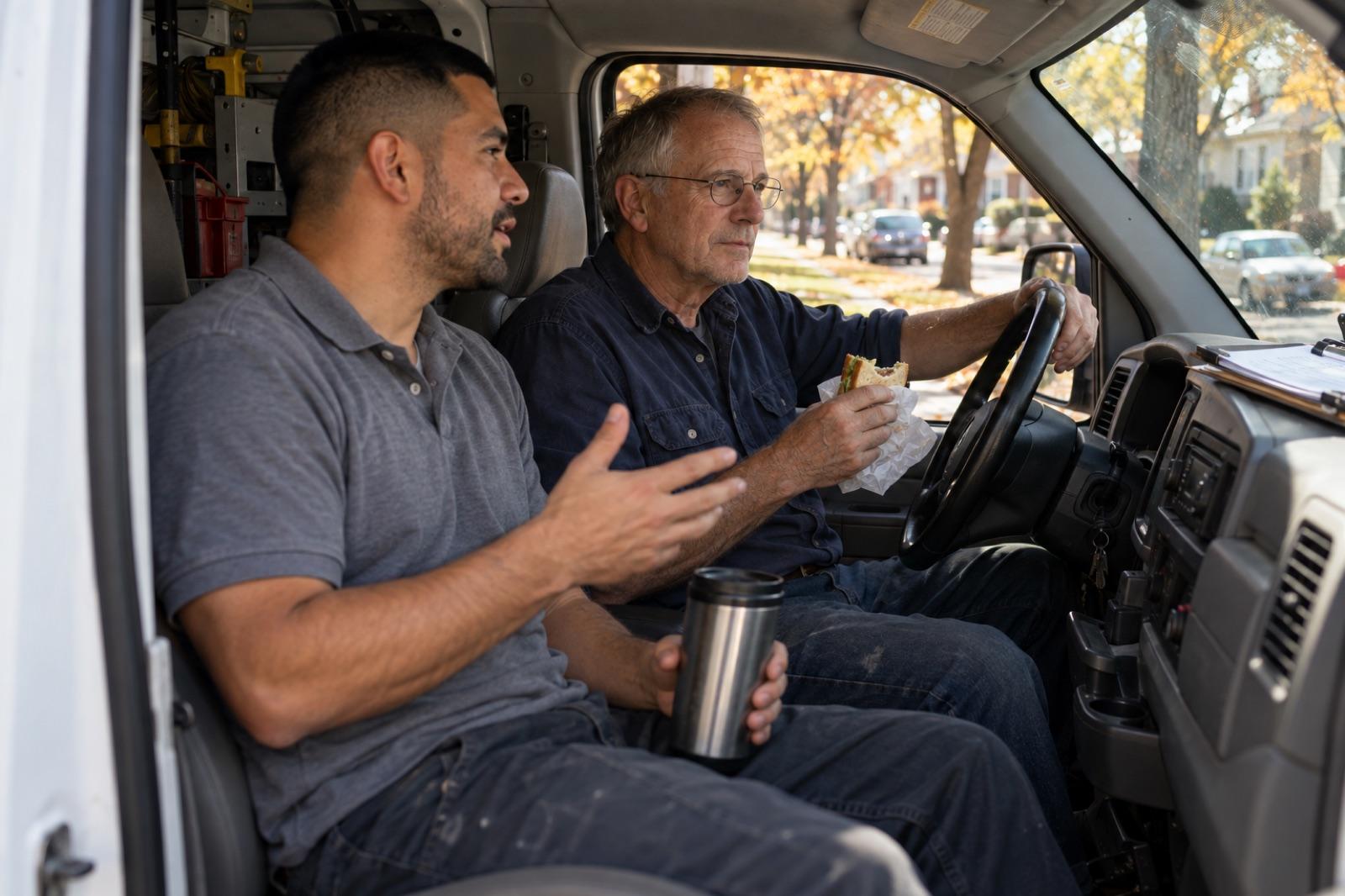
Gene's picture of a buyer was a company in a suit. Nobody like that wanted a two-van repair shop, so he figured nobody did. Over lunch in the van, Luis asked him who he thought had bought the shop across the river.
It was a refrigeration tech who had been working for someone else for fifteen years. Gene had sold him parts.
Small businesses change hands every quarter. BizBuySell counted 2,345 closed sales reported on its marketplace in the first quarter of 2026 alone. The median price was $350,000, so half of those sales were for less.
A steady customer list is the thing buyers pay for. A shop with customers who call back every year is a shop someone can buy and run.
Someone already inside
A technician or office manager who knows the customers. They may need seller financing or an SBA loan, and they need a straight answer about the price.
A tradesperson ready to own
Someone in the same trade, tired of building another owner's business. They buy the phone that already rings.
A nearby operator
A shop in the next town that wants your customers and your technician. Screen them carefully, because a competitor can also just be curious.
A career changer
Someone with savings, a manager's background and a lender's preapproval. They buy the systems and the people, and they will ask who runs the day.
Chapter 3
The calendar is the catch
Gene's real problem was not the buyer. It was the date. He had picked New Year's Eve in September, which left him about three months. A sale does not usually move that fast.
BizBuySell's Q2 2026 report put the median time on market for service businesses at 155 days, about five months, as reported by Small Business Trends. That is the middle. Some sell faster, and plenty take longer.
So the decision to sell has to come before the closing date, not after it. If no buyer comes, the owner can still close. If the owner closes first, there is nothing left for a buyer to buy.
Week 1Get the number from three years of tax returns. Decide the lowest price and the least cash at closing you would take.
Weeks 2 to 3Pull together the returns, the lease, the van titles, the customer count and what each person on staff does.
Month 1List it blind: the trade, the region and the yearly numbers, with no name. Buyers verify and sign a confidentiality agreement first.
Months 2 to 5Calls, visits after hours, an offer, a lender if the buyer uses one, and the attorneys on both sides.
After closingA set number of weeks training the buyer, written into the purchase agreement.
Chapter 4
What Gene did
Gene moved his date. He told his daughter he would keep the shop open through spring, and he told no one else.
He ran the free calculator from his last three returns, and it put the shop in a range he could explain. He listed it blind as an appliance repair business, two vans, thirty-one years, with the real yearly numbers.
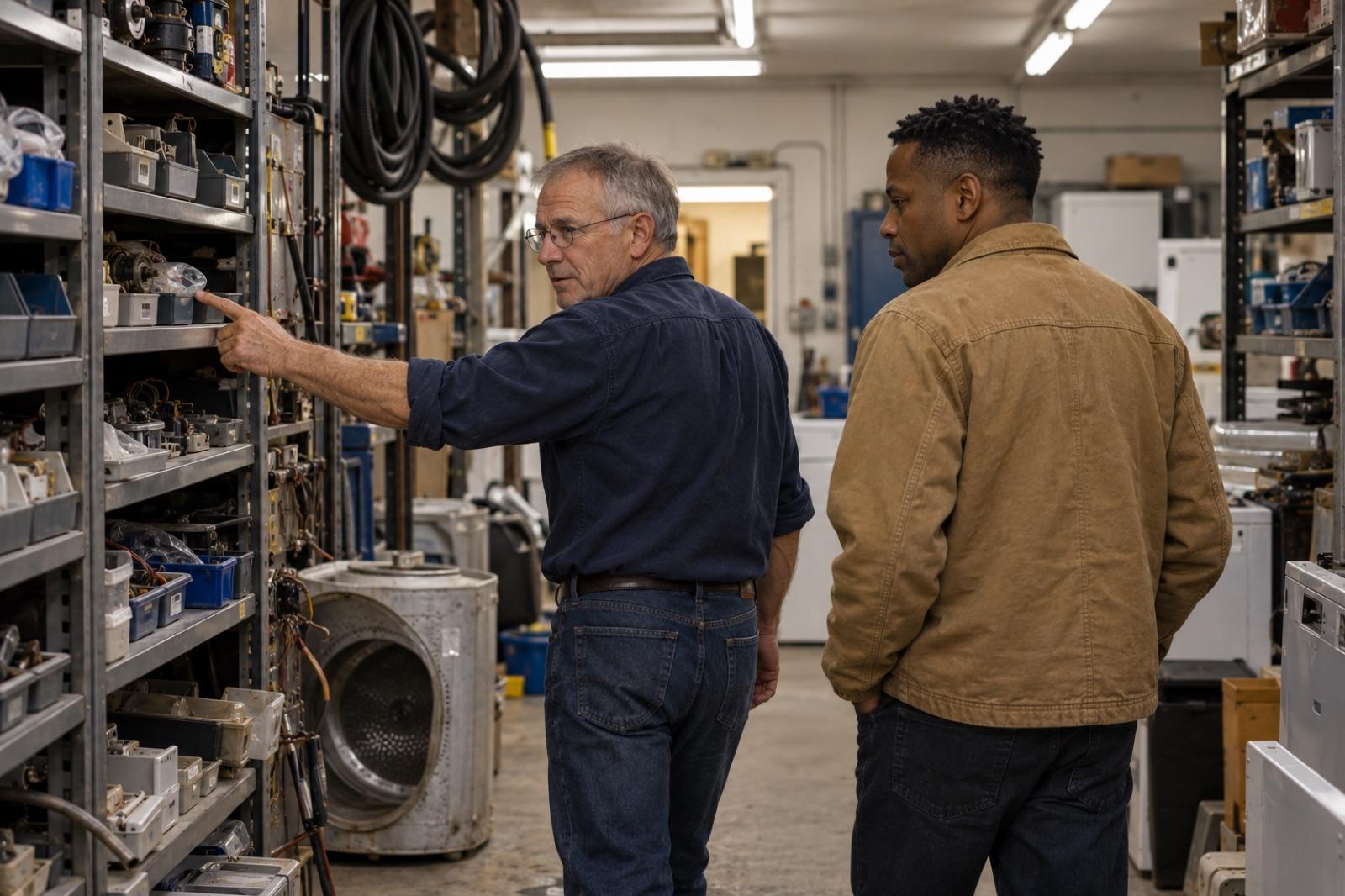
The first buyer to get through verification was Nate Pruitt, a service manager at an appliance store two counties over. Nate came by on a Thursday at six, after Luis had gone home. He spent an hour in the parts room and asked most of his questions about Luis.
"I was going to sell the vans for parts money and send my customers to someone else. I never asked if somebody wanted the whole thing."
Gene's sale is not closed yet, and this issue does not pretend it is. What changed is that Gene now has a choice. On New Year's Eve he could still lock the door. He no longer has to.
He is not alone in caring who comes next. In BizBuySell's Q2 2026 survey, 30% of owners selling put business continuity and their employees first.
What to do instead
Get the number before you decidePrice the business from three years of tax returns, then compare it fairly with what closing would bring. You cannot choose between two numbers when you only know one. Start with the free calculator
Give it six months before the closing dateService businesses spent a median of about five months on the market in the second quarter of 2026 (BizBuySell). Pick the date you would close, then start the sale well ahead of it. You can still close if no buyer comes.
List it blind and let verified buyers answer the questionOnly a real buyer can tell you whether yours will sell. On YourBizWorth, if no verified buyer asks about your business in your first 90 days, your next 90 days are free, ads included (conditions in the Terms). See how a listing is run
Sources
IBBA and M&A Source, Market Pulse Report, Q4 2025 (55th edition)Q4 2025, fielded January 1-15, 2026 · 350 brokers and advisors, 330 completed transactionsMedian SDE multiples by deal size: under $500K sells at 2.0x, $500K-$1M at 3.0x, $1M-$2M at 4.1x. Independent of marketplace data, which is why it is worth citing alongside.
BizBuySell, Q1 2026 Insight ReportQ1 2026 · 2,345 closed transactions, $2B enterprise valueMedian sale price $350,000 on median cash flow of $165,256. Average cash flow multiple 2.7x across all industries.
Small Business Trends, Small Business Acquisitions Drop 10% as Buyers Get More SelectivePublished August 11, 2026, reporting BizBuySell's Q2 2026 Insight Report; checked October 18, 2026 · BizBuySell survey of owners, buyers and brokers; sample size not stated in the articleReports that 35% of owners do not know what their business is worth and only 14% have completed a professional valuation. Also reports median time on market of 155 days for service businesses and 247 days for manufacturing in Q2 2026. A news summary of BizBuySell's figures, not the report itself.
BizBuySell, Insight Report, Q2 2026: Financing Becomes a Major Deal HurdleQ2 2026, archived copy checked October 18, 2026 · Survey of owners, buyers and brokers; sample size not stated on the pageStates that 90% of buyers expect seller financing to be part of their acquisition strategy, while 29% of owners plan to offer it, almost half say they will not, and 23% are undecided. Also reports owner priorities in a sale: 34% a fast, low-stress sale, 30% business continuity and employee well-being, 30% the highest price. The live page shows the latest quarter, so the link is an archived copy of the Q2 2026 edition.
YourBizWorth is not a broker, appraiser, or law firm. This column is general information, not legal, tax, or lending advice.
Questions people ask
Is my business too small to sell?
Often not. IBBA and M&A Source reported a median of 2.0 times owner earnings on sales under $500,000 at the end of 2025. Buyers pay for steady customers and a business that runs. A shop that earns its owner a living has something to sell.
What do I lose if I just close?
Usually everything that is not equipment: the customer list, the phone number, the name and the jobs. Used equipment sells for used prices. A sale price usually includes the equipment and those other things together.
Can I sell to my employee?
Yes, and it is common. An employee often needs help with the price, through seller financing, an SBA loan or both. Your own attorney drafts the purchase agreement and any note.
What if I list it and nobody buys?
Then you close, as you planned, a few months later. Keep the listing blind so customers and staff do not hear about it. Set the closing date far enough out that a sale has time to happen.